
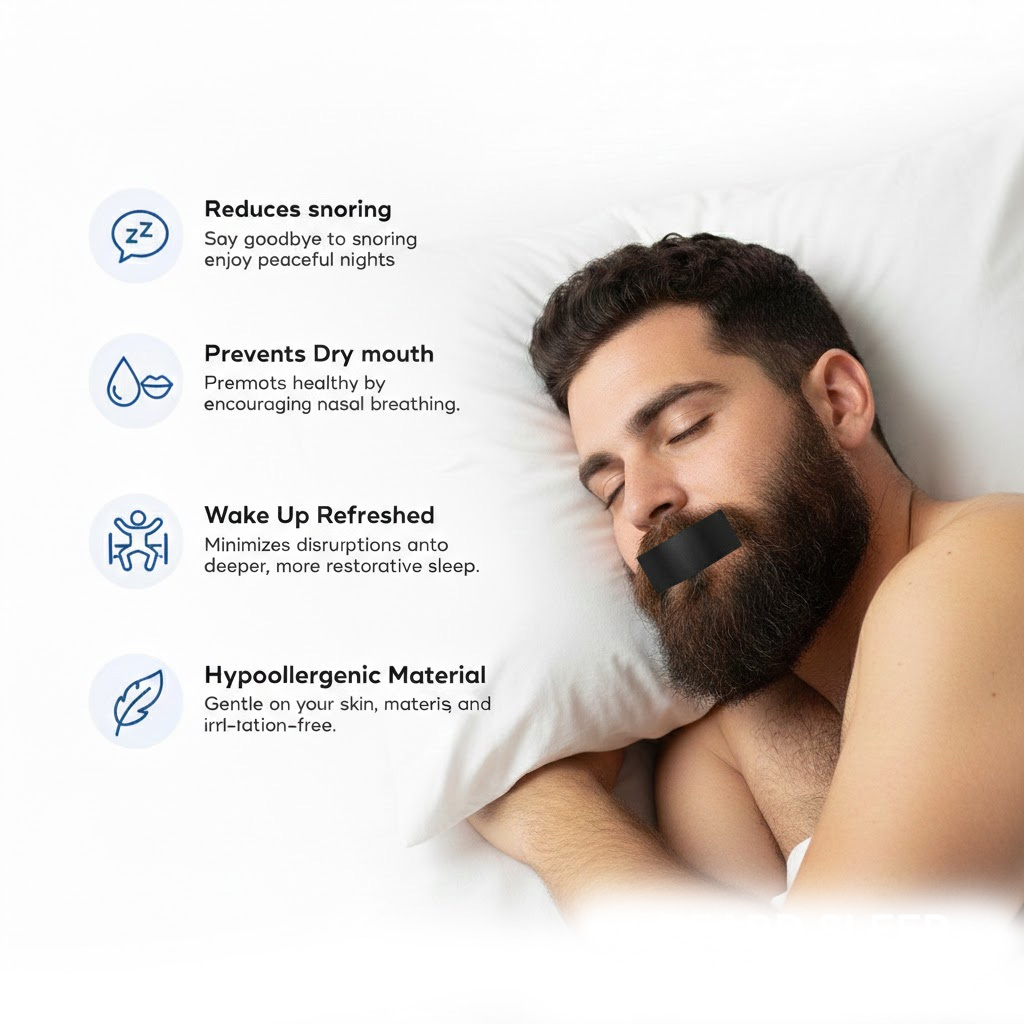
Many people struggle with morning fatigue, dry mouth, or heavy snoring, leading them to look for simple home remedies. One trend that has dominated social media is mouth taping for sleep. While influencers claim it can transform your health and even your jawline, medical experts urge caution.In this comprehensive guide, we’ll dive into the science, benefits, and critical safety risks of mouth taping for sleep to help you decide if it’s right for you.
What Exactly is Mouth Taping?
Mouth taping involves placing a small piece of surgical-grade, hypoallergenic tape over your lips before bed. The goal is to ensure you breathe through your nose rather than your mouth throughout the night.
Why the Shift to Nasal Breathing?
Biologically, humans are designed to be nasal breathers. Breathing through the nose:
- Filters Air: Tiny hairs (cilia) trap dust and allergens.
- Humidifies: It warms and moistens the air before it hits your lungs.
- Boosts Nitric Oxide: Nasal breathing releases nitric oxide, which improves oxygen circulation and lowers blood pressure.
The Benefits of Mouth Taping for sleep
According to anecdotal evidence and small-scale studies, people who successfully transition to nasal breathing via mouth taping report:
- Reduced Snoring: Keeping the mouth closed prevents the soft tissues in the throat from vibrating.
- Elimination of Dry Mouth: Mouth breathing dries out saliva, leading to bad breath and a higher risk of cavities.
- Better Energy Levels: Improved oxygen intake often results in waking up feeling more refreshed.
- Support for CPAP Users: Some patients with sleep apnea use mouth tape to prevent air leaks while using their CPAP machines.
Is Mouth Taping Dangerous? (Key Risks)
While it sounds simple, mouth taping for sleeping is not a universal solution and can be hazardous for certain individuals.
- Risk of Asphyxiation: If your nose becomes blocked during the night (due to allergies or a cold), you may struggle to get enough oxygen.
- Sleep Apnea Masking: Taping your mouth might stop the sound of snoring, but it doesn’t cure Obstructive Sleep Apnea (OSA).
- Skin Irritation: Using non-medical tapes (like duct tape) can cause severe rashes or pull at facial hair.
- Anxiety: Some users experience a “smothering” sensation, leading to panic or disrupted sleep.
How to Do It Safely: The 2026 Best Practices
If you are healthy and want to try this hack, follow these safety steps:
1. Choose the Right Tape
Do not use household tapes. Opt for:
- Hypoallergenic Micropore Tape: Gentle on the skin and breathable.
- Specialized Mouth Strips: Brands like SomniFix or MyoTape often feature a small vent in the middle for safety.
2. The “Daytime Trial”
Wear the tape for 30 minutes during the day while reading or watching TV. If you feel short of breath, mouth taping is not for you.
3. Proper Application
Apply a small vertical strip across the center of your lips. This “central seal” keeps the mouth closed but allows for emergency breathing through the corners if necessary.